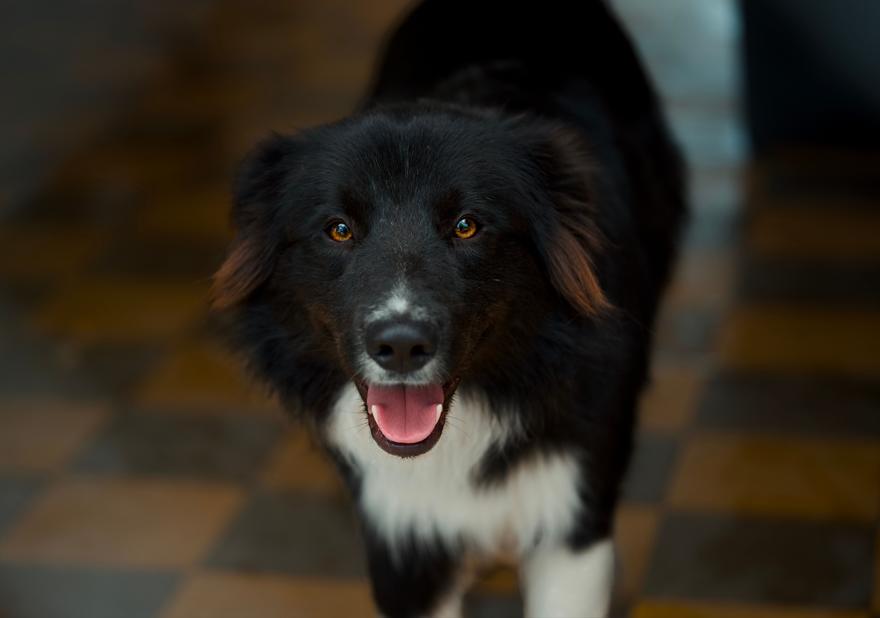
And what is actually happening during those quiet first weeks.
You bring your rescue dog home and — to your relief — they seem fine.
Quiet, even. A little reserved, maybe. But calm. Manageable. Not what you feared.
And you exhale. You think: this is going to be okay.
Then, a few weeks later, things begin to shift.
The barking starts. The following. The nervousness around visitors. The dog who seemed settled starts to seem unsettled.
And you find yourself asking: what happened? What did I do wrong?
Nothing happened. And you didn't do anything wrong.
What you witnessed in those first weeks was not your dog settling in. It was your dog working.
The observation phase
When a rescue dog enters a new home, their first job is not to relax. Their first job is to understand.
Dogs experience the world through structure. Through pack dynamics. Through a set of very clear questions: who handles things here? Who communicates what? Where do I fit? Is this place safe?
And a dog who doesn't yet have answers to those questions does what any intelligent creature does in an unfamiliar situation.
They watch. They wait. They gather information.
This is the quiet first phase. The dog who seems easy. The dog who follows you around gently but doesn't cause trouble. The dog who seems to be taking everything in their stride.
They are taking it in, yes. But not in the way you think. They are building a picture of how your household works. And until that picture is complete, they are careful. They are reserved. They are holding something back while they figure out what they are walking into.
What the rescue dog is asking
During this phase, your dog is essentially asking one central question.
Who is in charge here?
Not in a dominance sense — that is not how dogs actually think. But in the most practical, safety-focused sense. In any pack, there is someone who notices things. Someone who handles situations. Someone who communicates: I have this. You can rest.
Your rescue dog is looking for that person.
And in those first weeks, they are patient about it. They are still gathering information. Still deciding.
When the decision is made
This is what many owners call the honeymoon ending.
Somewhere around six to twelve weeks — sometimes sooner, sometimes later — your dog stops observing and starts operating. They have gathered enough information to understand how your household works. And they have made a conclusion about their role in it.
If the structure was clear — if they consistently received the signals that said someone else is handling things, you can rest — they will begin to settle more genuinely. They will rest more. Follow you less. React less.
But if those signals were unclear — if they watched and listened and couldn't find anyone consistently in that role — they will step into it themselves.
And that is when you see the shift in behaviour.
The barking at sounds outside. The tension when guests arrive. The inability to settle. The constant watching.
This is not your dog becoming more difficult. This is your dog doing the only thing they know how to do when they feel responsible for everything.
Why this matters
Understanding the observation phase changes how you see those first quiet weeks.
It means the calm was not the success. The calm was the pause before the decision.
And it means that what you do in those first weeks — how consistently you communicate, how clearly you show your dog that the structure here is stable — matters more than it might appear to matter in the moment.
You don't have to be perfect. Dogs are forgiving and adaptable. But understanding what your dog is actually doing in that quiet first phase means you can meet them there — rather than being surprised when things shift and wondering where the easy dog went.
The good news
The observation phase never fully closes.
Dogs are always gathering information. They are always reading the atmosphere. They are always, on some level, asking: is this still okay? Is someone still handling this?
Which means it is never too late to change the picture.
Even if your dog has been in your home for months or years and the behaviour has been difficult — the observation phase continues. The door is always open.
When the communication changes, the behaviour tends to follow.
Listen to the podcast about rescue dogs
This post connects to Episode 2 of Heal the Dogs with Celest — The Rescue Dog.
Find it wherever you listen to podcasts.
